What types of containers should
use Eco-Transport Coating?
Eco-Transport
Coating is ideal for use on maritime climate controlled shipping containers, ground reefers, smaller refrigerated vans, and
recreational vehicles.
Eco-Transport Coating is a 100% acrylic elastomeric coating infused with our proprietary
ceramic micro-beads. This high flex coating exhibits superior adhesion, weatherability, and solar reflectance providing an
excellent solution for refrigerated trailer tops.
How does Eco-Transport Coating work?
The thermal barrier coating has two important surface properties:
A) high solar reflective rating and B)an equally high thermal emittance rating. Solar reflectance is the percentage of solar
energy that is reflected by a surface. Thermal emittance refers to the ability of a material to release absorbed heat.
A standard refrigerated trailer roof is made from a sheet of uncoated aluminum covering 2 inches of polyurethane foam.
Although aluminum has a good reflectance rating (.71), it has a low emittance rating (9%). This is why on hot afternoon
the roof temperature on a refrigerated trailer can reach in excess of 185 degrees effectively transforming the roof into a
heat sink transferring heat through the insulation and into the trailer interior.
By coating the roof of a refrigerated
trailer with Eco-Transport Coating we can change the dynamics of the roof. With the application of Eco-Transport Coating the
reflectivity rating increases to .84 from .71, an 18% improvement, and the emittance improves significantly to 86% from 9%,
an astounding 856% improvement. After application, the roof temperature on a sunny 90 degree will stay within 5 degrees
of the ambient air temperature, virtually eliminating the roof as a heat source.
What test results substantiate
Eco-Transport Coating’s claims?
The performance measures of Eco-Transport Coating have been tested in house and corroborated with independent third part
testing, all conducted to ASTM guidelines and parameters. Although the laboratory results are impressive, the empirical results’
achieved with the application of Eco-Transport Coating are resounding.
How soon does Eco-Transport Coating produce a
return on investment?
Eco-Transport
Coating is a high-value investment for any climate controlled transportation fleet. In individual case studies, companies
that have implemented Eco-Transport Coating as part of a strategy to reduce green house gas emissions and increase fuel efficiencies
have seen a rapid return on investment (ROI) and often reach a break-even point within one (1) year of application.
Through energy efficiency gains, reduced operational downtime to conduct repairs, and an increased compressor lifespan,
Eco-Transport Coating is the surest investment in any market environment.
How long will Eco-Transport Coating
effectively reduce the cooling load of containers and reefers?
Eco-Transport Coating will continue to maximize energy efficiency and reduce heat gain in climate
controlled freight for a period often longer than the useable lifespan of many reefers and containers making it a extremely
cost-effective, long term solution.
Are special cleaning techniques necessary to maintain optimal performance?
Eco-Transport Coating is exceptionally
resistant to mold and mildew growth as well as dirt accumulation. Often, the coating will “self-clean” from rainwater
and ocean spray; however, if operated in arid climates or in dry seasons, regular pressure washing will ensure the coating
maintains optimal reflectivity and emissivity to ensure maximum energy efficiency.
Will Eco-Transport Coating
work on maritime containers as well as over ground freight?
Absolutely. Not only will the coating provide enhanced fuel/energy efficiencies and decreased compressor run-time
on the water, it will also generate tremendous energy savings while in port or shipping yard. Many port cities have
passed rigid energy conservation and green house gas emission laws, and in addition to reducing energy consumption, Eco-Transport
Coating also helps to minimize a port’s carbon footprint and green house gas emissions, helping to make the area cleaner
and safer for workers and residents.
Does the coating still contribute toward energy savings if other containers
are stacked on top, and it isn’t exposed to direct sunlight?
Although a container at the bottom of a stack (2-3 containers high) does not receive direct
solar energy, the energy is radiated downward to the bottom containers through the higher ones. Overtime, this radiated heat
will be transferred into the interior of the container forcing the compressor systems to continually run in order to maintain
a constant internal temperature. However, if the containers were coated with Eco-Transport Coating, instead of the radiated
heat transferring into the coating, the highly thermal emissive qualities of the coating would dissipate the solar energy
away from the container.
Is Eco-Transport Coating an eco-friendly product?
Eco-Transport Coating is a water-based, Zero VOC coating and contains
no harmful solvents, only natural water, so it will not off-gas or contribute to the production of ozone or other air pollutants.
Does Eco-Transport Coating help reduce carbon emissions and air pollution?
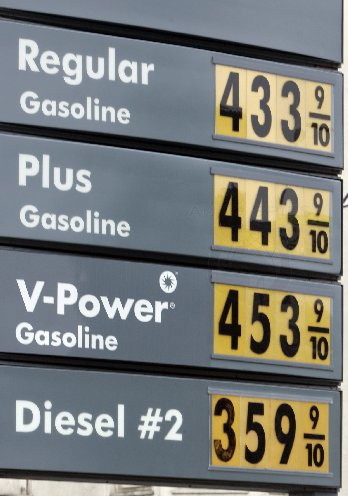
Reducing diesel fuel is not exclusively a MEANS to financial savings but an END in and of itself.
Reduced fuel consumption carries tremendous benefits to our environment and is a hallmark of a Socially Responsible.
For every Gallon of diesel fuel that is conserved, twenty-two and one half (22.5) POUNDS of Green House Gases and over 40
known HAZARDOUS AIR POLLUTANTS (According to the Clean Air Act) are prevented from being emitted into the atmosphere.
Imagine the promising future for our planet that we can engender through intelligent and innovative reductions in fuel consumption.
Eco-Transport Coating MSDS
Eco-Transport Coating TDS